
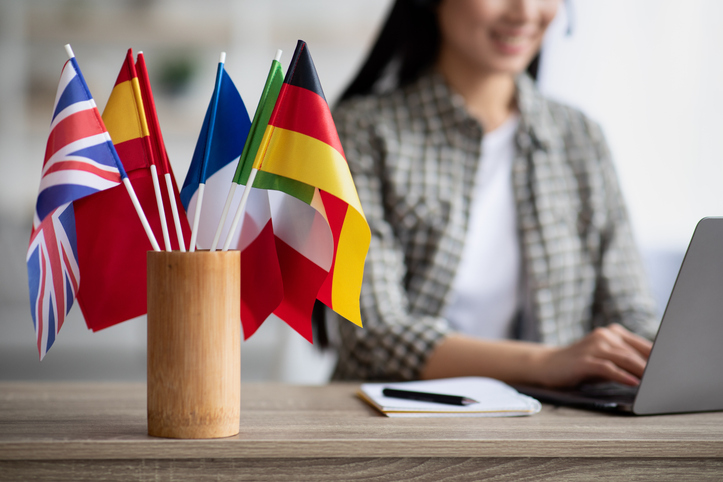
The domain of transformation and nomenclature services has undergone a unplumbed shift in Recent old age, largely motivated by the advancements in colored intelligence(AI). From machine translation(MT) tools like Google Translate to sophisticated natural nomenclature processing(NLP) systems, AI has revolutionized how businesses and individuals pass along across scientific discipline barriers. As a result, transformation agencies are now embracing AI to raise their services, streamline trading operations, and meet the ever-growing demand for multilingual .
The Rise of AI in Language Services
Traditionally, translation agencies relied on human translators to convert content from one terminology to another. While homo translators stay on necessity for high-quality, context-sensitive translations, AI has importantly increased their work. Machine translation has become quicker, more precise, and more contextually aware, sanctioning transformation agencies to offer services that are not only faster but also more cost-effective.
AI-powered tools, such as vegetative cell simple machine transformation(NMT), use deep scholarship algorithms to sympathize the linguistic context and nuances of language. These systems psychoanalyze vast amounts of text data to create translations that are more graceful and natural-sounding. This engineering is especially beneficial for handling boastfully volumes of , such as user manuals, websites, or sociable media posts, where hurry and are material.
Streamlining Workflow and Increasing Efficiency
AI tools are not just express to translation but also play a key role in enhancing the workflow within translation agencies. Automated systems can now wield tasks such as pre-processing text, quality self-confidence, and post-editing, all of which would have traditionally needful manual travail. This allows translators to focus on on more complex tasks that human being expertness, such as transcreation(adapting for a specific commercialise) or appreciation version.
One of the most significant impacts of AI in transformation agencies is the simplification in turnaround times. With simple machine transformation systems workings in tandem bicycle with human translators, agencies can meet the demands of clients who require fast, high-quality translations across four-fold languages. AI tools can also assist in managing boastfully-scale projects, allowing for more efficient imag direction, resource allocation, and real-time collaborationism among translators.
Improving Quality and Consistency
While machine translation has been historically criticized for lack of articulateness and context, AI has made significant strides in up these areas. Modern AI models are capable of understanding formulation expressions, territorial dialects, and manufacture-specific argot, which improves the overall truth and relevance of translations. Additionally, AI systems can be skilled to instruct from human feedback, ensuring that the output becomes increasingly pure over time.
For transformation agencies, AI offers the ability to wield across big projects or fourfold languages. Translation retentiveness(TM) systems, which store previously translated segments, help ascertain that uniform language is used throughout the stallion document or across various projects. This is particularly useful for industries like sound, checkup, and technical translation, where precision is dominant.
The Role of Human Expertise
Despite the advancements in AI, man translators stay obligatory. While AI can handle subroutine translations and simpleton texts with ease, it is still far from perfect when it comes to capturing the shade, tone, and appreciation nuances that man translators bring up to the table. This is why AI is best seen as a tool to augment, rather than supplant, human being expertness.
In the time to come, we can expect a loan-blend model where AI and man translators work in tandem bicycle. AI will handle the bulk of the address work, while man translators will sharpen on refinement, adapting, and ensuring that the transformation resonates with the aim audience.
The Future Outlook
As AI engineering continues to develop, the time to come of nomenclature services looks promising. Translation agencies that bosom AI-powered tools will not only be able to volunteer faster, more accurate translations but also gain a militant edge in the global commercialise. The ontogeny demand for multilingual content, liquid-fueled by globalization and the rise of digital platforms, will further accelerate the adoption of AI in nomenclature services.
Ultimately, AI’s role in transformation agencies is not to supersede human being expertness, but to enhance it, enabling businesses and individuals to pass more effectively in an progressively reticular world. As engineering advances, the synergism between AI and human translators will form the time to come of language services, creating more competent, precise, and culturally aware translations than ever before.